“The Industrial Heritage of Santorini”
ORGANIZATION
PROGRAM DURATION
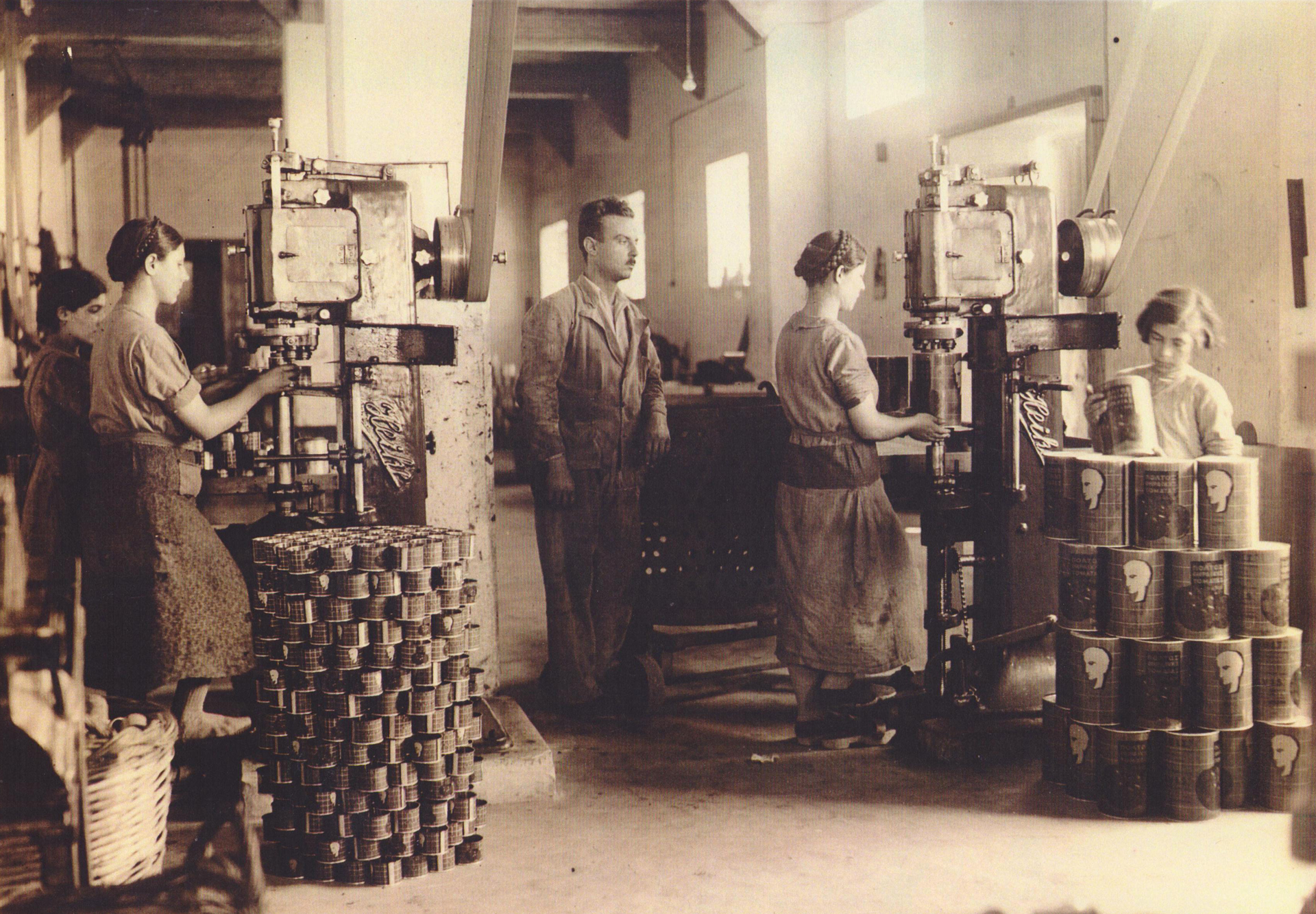
Santorini’s industrial history during the 19th and 20th centuries was shaped by activities such as mining, tomato canning, hosiery manufacturing, wine production, and the processing of fava beans. Key industrial landmarks, such as windmills, lime kilns, and shipyards, also reflect the island’s pre-industrial past. Along the caldera’s rim, remnants of old mines and their facilities can still be seen, while in Messaria, the abandoned hosiery factory of Antonios Markezenis stands as a decaying reminder of the once-thriving hosiery industry. Other areas, like Oia, were home to knitting mills that produced the famous DAR socks, and the eastern coast was dotted with tomato factories that once produced Santorini’s renowned tomato paste, many of which still house some intact machinery.
However, by the mid-20th century, Santorini’s industrial sector had declined due to a combination of natural disasters and economic changes. The 1956 earthquake devastated the island’s built environment, and by the 1970s, tourism became the dominant economic force, overshadowing the once-prosperous industries. Mining ceased in 1989 due to environmental protections, and many industrial buildings were abandoned or repurposed for tourism. As the years passed, personal stories and historical records of the island’s industrial life were lost, and many industrial structures began to deteriorate or were demolished, such as the ABIS tomato factory. Awareness of the value of preserving Santorini’s industrial heritage has only recently begun to grow, with academic research and efforts by organizations like the Greek National Tourism Organization (EOT) playing a role in promoting this cultural legacy.
In response, this program has been proposed to document and preserve Santorini’s industrial history. The goal is to collect, digitize, and conserve audiovisual materials such as photographs, archival records, and old recordings that tell the story of the island’s industrial activities. These materials are scattered throughout private collections, the developing Santorini Historical Archive, and the Industrial Tomato Museum, among other places. The program also focuses on gathering the oral histories of former workers and factory owners, many of whom are elderly, to capture their personal experiences. Furthermore, the surviving industrial sites and equipment will be mapped and documented. The program aims to create a documentary that will raise awareness of the island’s industrial heritage and encourage its preservation.